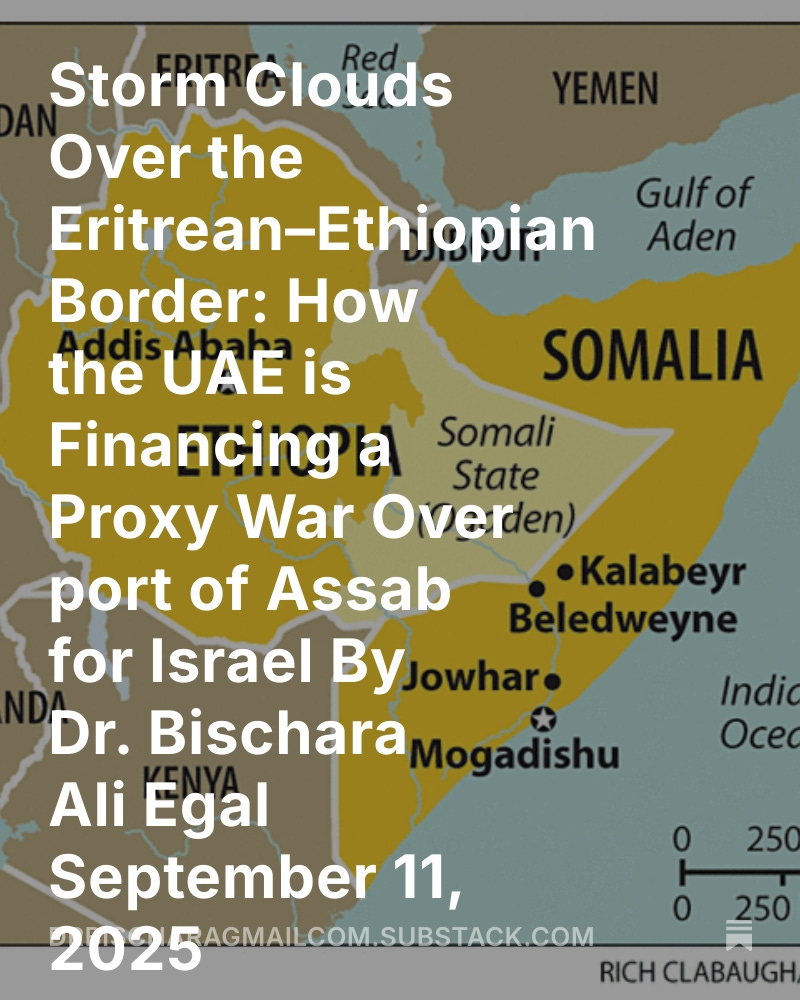
Abstract: This article examines the United Arab Emirates’ (UAE) calculated use of hybrid warfare to fragment Somalia and Sudan, advancing its geopolitical ambitions along the Red Sea corridor. Through
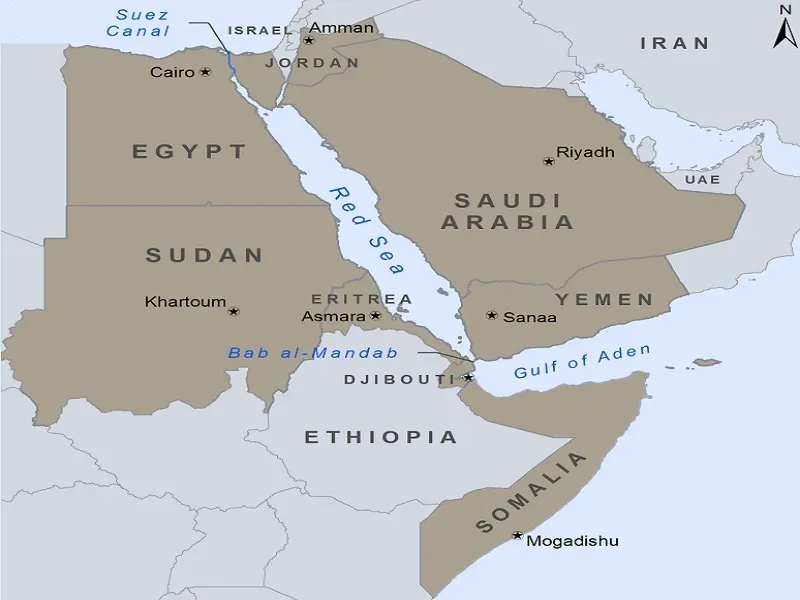
Introduction :
The United Arab Emirates (UAE) has played a significant role in the Horn of Africa and broader East African region over the last few decades. This involvement has been shaped by a mix of strategic, economic, and political interests, particularly in relation to Somalia and Sudan. Here’s an overview of the topic:
1. UAE’s Role in Somalia
Since the 1990s, following the collapse of Somalia’s central government, the UAE has been deeply involved in Somalia’s internal affairs. Some of its actions include economic investments, security cooperation, and alleged interference in the country’s political processes.
Proxy Conflicts:
The UAE has been accused of supporting various factions in Somalia, often fueling divisions rather than fostering unity. This includes backing regional states such as Puntland and Somaliland in their disputes with the federal government in Mogadishu. For example:
The UAE signed agreements with Somaliland to develop Berbera Port, bypassing Mogadishu.
Financial support has been provided to Puntland and other autonomous states, which some view as undermining Somalia’s federal government.
Security and Military Activities:
The UAE trained Somali soldiers and police forces but ended its program in 2018 after political tensions with Somalia’s federal government. Mogadishu accused the UAE of interfering in its sovereignty.
Strategic Interests:
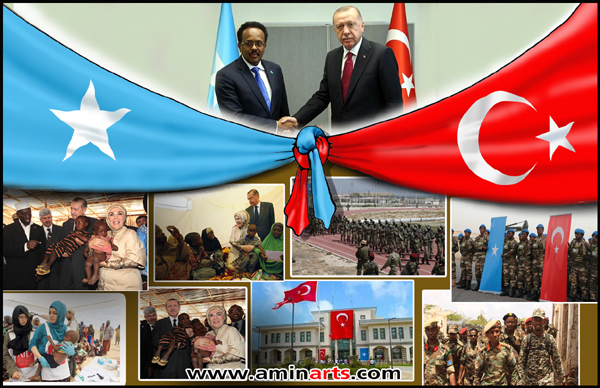
The UAE’s involvement in Somalia is often linked to its competition with Turkey and Qatar, which also have strong ties to Mogadishu. This rivalry is part of a broader regional competition for influence.
2. UAE’s Role in Sudan
Sudan has also been a focal point of UAE foreign policy, particularly in the context of its political instability and strategic location on the Red Sea.
Support for Military Factions:
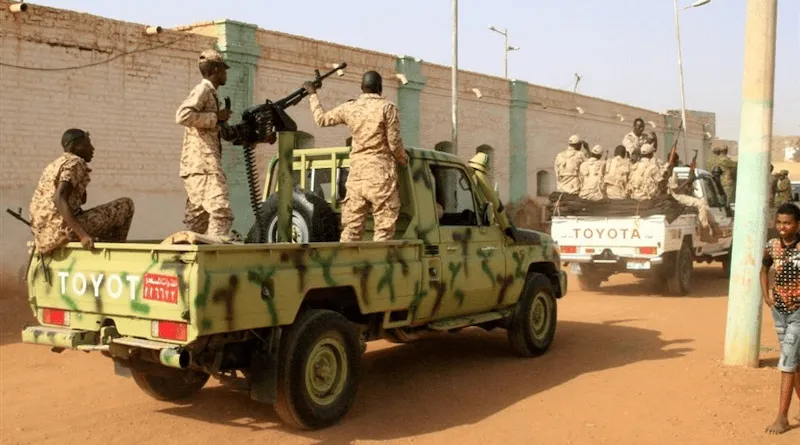
The UAE has backed Sudanese military leaders, especially during the transitional period after the overthrow of Omar al-Bashir in 2019. This includes support for leaders like General (s)Abdel Fattah al-Burhan and Mohamed Hamdan Dagalo (“Hemedti”), who leads the Rapid Support Forces (RSF).
Economic Investments:
The UAE has invested heavily in Sudanese agriculture, real estate, and infrastructure projects. However, critics argue these investments often serve UAE interests more than Sudan’s development.
Proxy Wars and Regional Rivalries:
The UAE’s involvement in Sudan is intertwined with its broader competition with other regional players, such as Qatar and Turkey. For instance, the UAE has sought to counteract Turkish influence in Port Sudan and along the Red Sea.
3. Broader Context of UAE’s Actions
Balkanization Allegations:
Critics accuse the UAE of contributing to the “balkanization” of Somalia by supporting regional states and exacerbating divisions. Similarly, in Sudan, the UAE’s support for certain factions is seen as fueling political instability.
Strategic Goals:
The UAE’s primary goal in both countries appears to be securing influence over strategic maritime routes and ensuring the stability of regimes aligned with its interests. Control over Red Sea ports and access to resources are key motivations.
Proxy Conflicts:
The UAE’s actions in Somalia and Sudan are often framed as part of a broader geopolitical struggle involving Qatar, Turkey, and other players. These proxy wars have worsened regional instability.
Key Impacts
Somalia: The UAE’s involvement has deepened divisions between Somalia’s federal government and regional states, undermining efforts to rebuild a united country.
Sudan: The UAE’s backing of military leaders has contributed to the ongoing power struggles, including the recent conflict between the Sudanese Armed Forces (SAF) and the RSF, which has plunged the country into further chaos.
Conclusion
The UAE’s activities in Somalia and Sudan reflect a broader trend of Middle Eastern powers extending their influence into Africa through economic investments, military support, and alliances with local actors. While the UAE’s actions are often justified as part of its security and economic strategy, they have been criticized for exacerbating divisions and fueling proxy wars in already fragile states.
4. UAE’s Geopolitical Ambitions
The UAE’s activities in the Horn of Africa, particularly Somalia and Sudan, are part of its broader strategy to project power and secure influence over key geopolitical regions. The UAE’s interests include:
Control Over Maritime Trade Routes:
Somalia and Sudan are located along critical waterways. The Gulf of Aden and the Red Sea are crucial for global trade, including oil shipments from the Gulf. The UAE’s involvement in these countries aligns with its efforts to dominate port infrastructure and secure trade routes, including through DP World, a major Emirati port operator.
Countering Regional Rivals:
The UAE views Turkey and Qatar as competitors for influence in Africa. Turkey’s close relationship with Somalia and its growing presence in Sudan (e.g., the Suakin Island lease under the al-Bashir regime) have heightened Emirati fears of losing strategic dominance.
Soft Power Diplomacy:
The UAE uses a combination of financial aid, investments, and security partnerships to win influence. However, this approach often leads to dependency rather than development.
5. UAE’s Actions in Somalia
Fragmentation of Somalia (Balkanization):The term “balkanization” is used to describe the UAE’s alleged role in fostering divisions within Somalia. Key points include:
Support for Somaliland and Puntland:
Somaliland, which declared independence in 1991, and Puntland, an autonomous region, have received direct Emirati support. For example: In 2018, the UAE signed a 30-year deal with Somaliland to develop Berbera Port, ignoring Somalia’s federal government. The UAE also provided military aid to Somaliland, including training and equipment, further straining relations with Mogadishu.
Weakening Federal Authority:
By engaging directly with regional states, the UAE has undermined Somalia’s federal government. This has prevented the development of a strong, centralized Somali state and prolonged the country’s instability.
Economic and Military Interventions
The UAE invested in key infrastructure projects, but critics argue these projects disproportionately benefit Emirati interests.
The UAE’s military presence in Somalia included training Somali forces, particularly in the fight against Al-Shabaab. However, the abrupt withdrawal of UAE trainers in 2018 created a security vacuum and increased tensions.
Proxy Wars and Rivalries
The UAE’s support for Somali opposition figures and regional states is seen as a counterbalance to Turkish and Qatari influence in Mogadishu.
The UAE’s rivalry with Qatar has also played out in Somalia, with both countries supporting competing factions. This rivalry has deepened divisions within Somalia’s fragile political system.
6. UAE’s Role in Sudan
Post-Bashir Period (2019-Present)
After the overthrow of Omar al-Bashir, Sudan entered a transitional period marked by intense competition between civilian leaders and the military. The UAE has been heavily involved in shaping this transition:
Backing the Military:
The UAE has consistently supported Sudan’s military leadership, including: General Abdel Fattah al-Burhan, head of the Sudanese Armed Forces (SAF). Mohamed Hamdan Dagalo (“Hemedti”), leader of the paramilitary Rapid Support Forces (RSF). This support has included financial aid, military equipment, and political backing.
Fueling the SAF-RSF Conflict:
The ongoing conflict between the SAF and RSF has been linked to external interference, including by the UAE. Critics argue the UAE’s support for Hemedti and the RSF has emboldened the paramilitary group, contributing to the violence.
Economic Exploitation
The UAE has invested heavily in Sudan’s agricultural sector, leasing large tracts of farmland for food production. These investments often benefit Emirati interests, raising concerns about neo-colonial exploitation.
Emirati companies have also sought to control Sudan’s gold exports, particularly through partnerships with the RSF, which controls key gold mines.
Red Sea Competition
Sudan’s strategic location along the Red Sea has made it a battleground for competing powers, including the UAE, Saudi Arabia, and Turkey. The UAE’s efforts to dominate Red Sea ports and maritime trade have influenced its involvement in Sudan.
7. Broader Implications of UAE’s Involvement
Destabilization of Fragile States
In both Somalia and Sudan, the UAE’s actions have exacerbated internal divisions and undermined efforts to build stable, unified governments. By prioritizing its own interests, the UAE has contributed to prolonged instability.
Humanitarian Consequences
The proxy wars and rivalries fueled by the UAE (and other powers) have worsened humanitarian crises in Somalia and Sudan. Millions of people face displacement, food insecurity, and violence as a result.
Geopolitical Competition in Africa
The UAE’s actions in Somalia and Sudan are part of a larger scramble for influence in Africa by Middle Eastern and global powers, including Qatar, Turkey, Saudi Arabia, and China. This competition has turned the region into a proxy battleground.
UAE’s Geopolitical Ambitions:
Control over Maritime Trade Routes: The UAE’s investments in African ports and infrastructure are part of its strategy to control key maritime trade routes.
Countering Regional Rivals: The UAE’s involvement in Sudan and Somalia is partly aimed at countering the influence of regional rivals such as Turkey and Qatar.
UAE’s Actions in Somalia:
Support for Somaliland and Puntland: The UAE’s agreements with Somaliland, such as the development of Berbera Port, have been viewed as undermining Somalia’s federal government.
Economic and Military Interventions: The UAE has invested in infrastructure projects and provided military support in Somalia, though these actions have been controversial.
UAE’s Role in Sudan:
Backing the Military: The UAE has been accused of supporting Sudan’s Rapid Support Forces (RSF), a paramilitary group implicated in human rights abuses.
Economic Exploitation: The UAE’s involvement in Sudan’s gold trade has raised concerns about funding armed groups and perpetuating conflict.
Broader Implications of UAE’s Involvement:
Destabilization of Fragile States: The UAE’s actions in Somalia and Sudan have been criticized for exacerbating internal divisions and undermining efforts to build stable governments.
Humanitarian Consequences: The conflicts in Sudan and Somalia, influenced by external interventions, have led to significant humanitarian crises.
8. Conclusion
The UAE’s involvement in Somalia and Sudan reflects a broader trend of Middle Eastern powers extending their geopolitical influence into Africa. While the UAE’s actions are driven by strategic interests, they have had far-reaching consequences for the region, including deepening divisions, fueling conflicts, and undermining efforts to achieve peace and stability.
The situation highlights the need for a balanced approach that prioritizes regional stability and the sovereignty of African nations over external powers’ interests. Without such an approach, the cycle of conflict and exploitation in Somalia and Sudan is likely to continue.
BIBLIOGRAPHY AND footnotes:
Abdelaziz, K., Eltahir, N., & Eltahir, N. (2023, April 15). Sudan clashes kill at least 25 in power struggle between army, paramilitaries. Reuters. Retrieved from https://www.reuters.com/world/africa/sudan-clashes-kill-least-25-power-struggle-between-army-paramilitaries-2023-04-15/
Ardemagni, E. (2024, May 6). The UAE’s Rising Military Role in Africa: Defending Interests, Advancing Influence. Italian Institute for International Political Studies. Retrieved from https://www.ispionline.it/en/pubblicazione/uaes-rising-military-role-africa-defending-interests-advancing-influence-30047
Callamard, A. (2024, November 14). UAE-made armored vehicles used by Sudan’s RSF: Amnesty International. Amnesty International. Retrieved from https://www.amnesty.org/en/latest/news/2024/11/uae-made-armored-vehicles-used-by-sudans-rsf-amnesty-international/
Gavin, M. (2024, September 26). Washington’s Mixed Messages on Fueling the War in Sudan. Council on Foreign Relations. Retrieved from https://www.cfr.org/article/washingtons-mixed-messages-fueling-war-sudan
Konyndyk, J. (2024, September 22). UAE Must Stop Fueling Sudan Atrocities. Refugees International. Retrieved from https://www.refugeesinternational.org/reports/2024/9/22/uae-must-stop-fueling-sudan-atrocities
Lewis, A. (2023, May 3). Sudan’s conflict: Who is backing the rival commanders? Reuters. Retrieved from https://www.reuters.com/world/africa/sudans-conflict-who-is-backing-rival-commanders-2023-05-03/
Mahjoub, H. (2024, May 24). It’s an open secret: The UAE is fuelling Sudan’s war—and there’ll be no peace until we call it out. The Guardian. Retrieved from https://www.theguardian.com/commentisfree/2024/may/24/uae-fuelling-sudan-war
Savage, R. (2024, December 24). UAE becomes Africa’s biggest investor amid rights concerns. The Guardian. Retrieved from https://www.theguardian.com/global-development/2024/dec/24/uae-becomes-africas-biggest-investor-amid-rights-concerns
Walsh, D., & Koettl, C. (2024, September 21). How a U.S. Ally Uses Aid as a Cover in War. The New York Times. Retrieved from https://www.nytimes.com/2024/09/21/world/africa/uae-sudan-war-aid.html
Wikipedia contributors. (2025, March 5). Mohamed bin Zayed Al Nahyan. Wikipedia, The Free Encyclopedia. Retrieved from https://en.wikipedia.org/wiki/Mohamed_bin_Zayed_Al_Nahyan
Wikipedia contributors. (2025, March 5). Rapid Support Forces. Wikipedia, The Free Encyclopedia. Retrieved from https://en.wikipedia.org/wiki/Rapid_Support_Forces
Wikipedia contributors. (2025, March 5). Sudanese civil war (2023–present). Wikipedia, The Free Encyclopedia. Retrieved from https://en.wikipedia.org/wiki/Sudanese_civil_war_(2023–present)
* About the Author
Dr. Bischara Ali Egal is a psychiatrist, mental health clinician, and founder of the Horn of Africa Center for Strategic and International Studies (HornCSIS), based in Ottawa, Canada. He previously served as a federal consultant for the Dept. of Indian+ Northern Affairs in the Northwest Territories and Yukon in the 1980s, also worked with Canada Dept. of Health & Welfare Canada in Ottawa, in 1990s. He is the founder and Chief Clinical Officer of Canada Specialized Hospital Inc., one of the first two psychiatric hospitals established in Somalia post–civil war. Dr. Egal has lectured in political sci…Clinical Psychology, and Mental health to variouse Universities in Canada, Somalia and Yemen.
Dr. Egal is currently a declared candidate for political office in Somalia, running either from Benadir region (his birthplace, Mogadishu) or Galmudug State (his father’s ancestral region). His campaign is grounded in a patriotic and egalitarian vision of a sovereign Somalia, free from foreign exploitation, rooted in democratic governance, national unity, and peaceful regional cooperation. Opposing clanism, oligarchic corruption, and neocolonial incursions, Dr. Egal advocates for a government accountable…