136 Afr. J. Pol. Sci. Int. Relat.
framework, as Aras and Akpınar (2017) argue, Turkey
aims to build a partnership grounded in a shared Muslim
identity by leveraging these historical ties, especially in
Somalia (137-158).
Similarly, Doğan (2020), notes that one of the main
elements of Turkey’s soft power strategy in Somalia is to
evoke the Ottoman period and highlight its Muslim
identity (87-108). These strategies are seen as part of
Turkey’s efforts to present itself as a friendly and allied
Muslim nation in the region. Furthermore, the Ottoman
Empire’s interest in East Africa in the 16th century and its
influence in the region provide historical depth to Turkey’s
relationship with Somalia, playing a significant role in
Turkey’s current foreign policy and legitimizing its
presence in Somalia. In this context, Turkey’s
humanitarian aid and development projects reinforce
norms of peace and cooperation (Demirtaş, 2020).
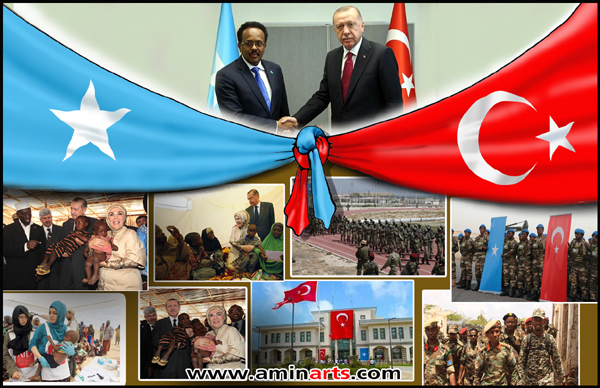
Turkey has garnered attention for its humanitarian aid
activities in Africa, particularly in Somalia. President
Recep Tayyip Erdoğan’s visit to Somalia following the
2011 drought and famine is seen as a pivotal moment in
relations between the two countries. This visit
underscored Turkey’s sensitivity to humanitarian crises in
Somalia and its commitment to provide assistance.
Erdoğan’s visit had a positive impact on the Somali
people, enhancing Turkey’s image in the region (Smith
and Ahmed, 2021). Following this visit, Turkey launched
a major humanitarian aid operation in Somalia, further
strengthening the favorable perception of Turkey among
the Somali population.
Turkey’s humanitarian aid and development projects in
Somalia have provided not only emergency relief but also
long-term development initiatives. Turkish companies and
institutions have made substantial contributions to
improving Somalia’s infrastructure, education, and health
services, especially through projects implemented by the
Turkish Cooperation and Coordination Agency (TIKA)
(Kurt, 2023). These projects have made Turkey’s
presence in Somalia sustainable and reinforced the
positive perception of Turkey among Somalis.
Additionally, Turkey’s Muslim identity resonates with the
majority of Somali society, enhancing its legitimacy in the
region. Turkey’s extensive assistance to Somalia is
based on the principles of religious brotherhood and
solidarity, which appeal to Somalia’s Muslim population
and deepen the bilateral relationship.
However, there are concerns that Turkey’s emphasis
on its Muslim identity could potentially foster sectarian
divisions within Somalia or empower specific political
groups at the expense of national unity. In this regard,
Huliaras et al. (2016:603-1620) discuss how some local
actors in Somalia perceive Turkey’s emphasis on its
Muslim identity, and they highlight concerns that this
emphasis may exacerbate sectarian divisions or favor
certain political groups.
Turkey’s educational and cultural projects contribute to
a positive perception in Somalia, particularly by
supporting the education of younger generations through
the establishment of schools and educational institutions
in the country. A notable example is the Somalia
Mogadishu Recep Tayyip Erdogan Vocational School of
Health Services, which began formal education in
Mogadishu with a Turkish Language Preparatory
Program in 2016 (uhs.edu.tr, 2024). These educational
projects positively impact the Somali youth and
strengthen cultural ties between the two countries. In
conclusion, Turkey’s identity and perception-building
efforts in Somalia are manifested through historical ties,
humanitarian aid activities, development projects, and
cultural initiatives. These efforts enhance Turkey’s
favorable perception and contribute to the deepening of
bilateral relations. However, there are criticisms
suggesting that Turkey’s involvement in the education
sector may be viewed as an attempt to shape the
ideological leanings of future Somali leaders, potentially
fostering a dependency on Turkish political and economic
support. In this regard, Barnes (2016) examines Turkey’s
soft power strategy in Somalia, discussing how
educational activities influence Somalia’s political and
ideological structure. He critiques Turkey’s educational
investments as having the potential to increase Turkey’s
political influence and shape the ideological orientations
of future Somali leaders, and he assesses how such
programs may impact Somalia’s political independence
and economic development (Barnes, 2016).
Norms and values
Turkey promotes democratic values and norms of good
governance in Somalia (Kurt, 2023). In this context,
Turkey’s foreign policy toward Somalia aims to enhance
stability and strengthen democratic governance systems
in the region.
Turkey’s diplomatic presence in Somalia, including its
embassy in Mogadishu, represents important steps
toward realizing this goal. As one of the 44 Turkish
embassies in Africa, the embassy in Mogadishu
institutionalizes Turkey’s presence in Somalia and
strengthens political ties between the two countries
(Özkan, 2021). Moreover, the Turkish government’s
political support for the Somali government has
significantly contributed to the democratization process in
the country, particularly during Somalia’s transition from a
transitional government to a federal structure. Turkey has
provided technical assistance for electoral processes in
Somalia and, through election observation missions, has
helped ensure that elections are conducted transparently
and fairly. These contributions serve to establish
democratic norms in Somalia and enhance the credibility
of electoral processes (Smith and Ahmed, 2021).
However, some observers have raised concerns about
Turkey’s alignment with specific political groups, which
could lead to accusations of partiality in its support for
framework, as Aras and Akpınar (2017) argue, Turkey
aims to build a partnership grounded in a shared Muslim
identity by leveraging these historical ties, especially in
Somalia (137-158).
Similarly, Doğan (2020), notes that one of the main
elements of Turkey’s soft power strategy in Somalia is to
evoke the Ottoman period and highlight its Muslim
identity (87-108). These strategies are seen as part of
Turkey’s efforts to present itself as a friendly and allied
Muslim nation in the region. Furthermore, the Ottoman
Empire’s interest in East Africa in the 16th century and its
influence in the region provide historical depth to Turkey’s
relationship with Somalia, playing a significant role in
Turkey’s current foreign policy and legitimizing its
presence in Somalia. In this context, Turkey’s
humanitarian aid and development projects reinforce
norms of peace and cooperation (Demirtaş, 2020).
Turkey has garnered attention for its humanitarian aid
activities in Africa, particularly in Somalia. President
Recep Tayyip Erdoğan’s visit to Somalia following the
2011 drought and famine is seen as a pivotal moment in
relations between the two countries. This visit
underscored Turkey’s sensitivity to humanitarian crises in
Somalia and its commitment to provide assistance.
Erdoğan’s visit had a positive impact on the Somali
people, enhancing Turkey’s image in the region (Smith
and Ahmed, 2021). Following this visit, Turkey launched
a major humanitarian aid operation in Somalia, further
strengthening the favorable perception of Turkey among
the Somali population.
Turkey’s humanitarian aid and development projects in
Somalia have provided not only emergency relief but also
long-term development initiatives. Turkish companies and
institutions have made substantial contributions to
improving Somalia’s infrastructure, education, and health
services, especially through projects implemented by the
Turkish Cooperation and Coordination Agency (TIKA)
(Kurt, 2023). These projects have made Turkey’s
presence in Somalia sustainable and reinforced the
positive perception of Turkey among Somalis.
Additionally, Turkey’s Muslim identity resonates with the
majority of Somali society, enhancing its legitimacy in the
region. Turkey’s extensive assistance to Somalia is
based on the principles of religious brotherhood and
solidarity, which appeal to Somalia’s Muslim population
and deepen the bilateral relationship.
However, there are concerns that Turkey’s emphasis
on its Muslim identity could potentially foster sectarian
divisions within Somalia or empower specific political
groups at the expense of national unity. In this regard,
Huliaras et al. (2016:603-1620) discuss how some local
actors in Somalia perceive Turkey’s emphasis on its
Muslim identity, and they highlight concerns that this
emphasis may exacerbate sectarian divisions or favor
certain political groups.
Turkey’s educational and cultural projects contribute to
a positive perception in Somalia, particularly by
supporting the education of younger generations through
the establishment of schools and educational institutions
in the country. A notable example is the Somalia
Mogadishu Recep Tayyip Erdogan Vocational School of
Health Services, which began formal education in
Mogadishu with a Turkish Language Preparatory
Program in 2016 (uhs.edu.tr, 2024). These educational
projects positively impact the Somali youth and
strengthen cultural ties between the two countries. In
conclusion, Turkey’s identity and perception-building
efforts in Somalia are manifested through historical ties,
humanitarian aid activities, development projects, and
cultural initiatives. These efforts enhance Turkey’s
favorable perception and contribute to the deepening of
bilateral relations. However, there are criticisms
suggesting that Turkey’s involvement in the education
sector may be viewed as an attempt to shape the
ideological leanings of future Somali leaders, potentially
fostering a dependency on Turkish political and economic
support. In this regard, Barnes (2016) examines Turkey’s
soft power strategy in Somalia, discussing how
educational activities influence Somalia’s political and
ideological structure. He critiques Turkey’s educational
investments as having the potential to increase Turkey’s
political influence and shape the ideological orientations
of future Somali leaders, and he assesses how such
programs may impact Somalia’s political independence
and economic development (Barnes, 2016).
Norms and values
Turkey promotes democratic values and norms of good
governance in Somalia (Kurt, 2023). In this context,
Turkey’s foreign policy toward Somalia aims to enhance
stability and strengthen democratic governance systems
in the region.
Turkey’s diplomatic presence in Somalia, including its
embassy in Mogadishu, represents important steps
toward realizing this goal. As one of the 44 Turkish
embassies in Africa, the embassy in Mogadishu
institutionalizes Turkey’s presence in Somalia and
strengthens political ties between the two countries
(Özkan, 2021). Moreover, the Turkish government’s
political support for the Somali government has
significantly contributed to the democratization process in
the country, particularly during Somalia’s transition from a
transitional government to a federal structure. Turkey has
provided technical assistance for electoral processes in
Somalia and, through election observation missions, has
helped ensure that elections are conducted transparently
and fairly. These contributions serve to establish
democratic norms in Somalia and enhance the credibility
of electoral processes (Smith and Ahmed, 2021).
However, some observers have raised concerns about
Turkey’s alignment with specific political groups, which
could lead to accusations of partiality in its support for
democratic processes. For instance, Ylönen analyzes
Turkey’s strategic engagement in Somalia, focusing on
how its relations with certain political groups can
negatively affect perceptions of neutrality. In this critical
study, Ylönen argues that Turkey’s close ties with specific
political factions may hinder its image as an equal partner
across the country, potentially weakening its long-term
influence (Ylönen, 2019:423-442a).
Turkey’s efforts to promote good governance norms in
Somalia have been supported by institutional capacity-
building projects. These projects, primarily implemented
through the Turkish Cooperation and Coordination
Agency (TIKA), aim not only to strengthen public
administration and law enforcement but also to establish
norms of transparency, accountability, and effective
governance in Somalia (Kurt, 2023). Additionally,
Turkey’s diplomatic presence in Somalia plays a key role
in reinforcing political relations between the two
countries. As previously mentioned, the Turkish embassy
in Mogadishu serves as an important center for
conducting diplomatic relations and coordinating
development and humanitarian aid projects in the region.
This diplomatic presence is a crucial tool for Turkey to
achieve its long-term strategic goals in Somalia (Özkan,
2021).
In light of this information, it can be argued that
Turkey’s efforts to promote democratic values and good
governance norms in Somalia contribute to peace and
stability in the region. Turkey supports peace-building
and counter-terrorism efforts within Somalia and
collaborates with the Somali government in these
processes. Undoubtedly, Turkey’s support for peace
initiatives in Somalia enhances political stability and
strengthens democratic governance systems (Kavas,
2018). Furthermore, Turkey’s training and capacity-
building projects also contribute to the dissemination and
entrenchment of democratic norms by increasing the
capacity of local governments and civil society
organizations.
Military relations
Analyzing the military relations between Turkey and
Somalia is crucial for understanding the depth, scope,
and impact of strategic cooperation between the two
countries. Turkey’s military support and training in
Somalia have a direct effect on regional security
dynamics and enhance Somalia’s national security
capacity. Moreover, as these relations are viewed as part
of Turkey’s strategy to increase its influence in Africa,
they also play a critical role in shaping regional and
international politics.
Security cooperation
Turkey is strengthening its security cooperation through
Misirli 137
its military presence in Somalia. In this regard, the
TURKSOM military training base, established in
Mogadishu in 2017, plays a crucial role in training and
equipping Somali security forces (Kavas, 2018).
TURKSOM is one of Turkey’s largest military training
facilities abroad and was created to enhance the capacity
and professionalism of the Somali army. The base is vital
in bolstering Somalia’s counter-terrorism capabilities,
particularly in the fight against al-Shabaab, which
presents serious challenges to the country. International
support is essential for Somalia’s battle against terrorism,
and Turkey provides comprehensive training to Somali
security forces through TURKSOM, enhancing their
counter-terrorism skills (Görmez, 2023). The training at
TURKSOM encompasses not only military skills but also
modern warfare techniques, strategic planning, and
logistical support.
These comprehensive programs enable Somalia’s
security forces to operate more effectively and in a
coordinated manner. Furthermore, Turkey’s military
training assistance contributes to achieving Somalia’s
long-term security and stability goals (Kavas, 2018).
Turkey’s military cooperation with Somalia is also part of
international efforts to ensure regional security and
stability. In addition to supporting Somalia’s security
forces, Turkey collaborates with other international actors
to create a comprehensive security network, effectively
addressing Somalia’s security needs (Smith and Ahmed,
2021). Moreover, Turkey’s military presence fosters
deeper strategic relations between the two countries,
paving the way for strong ties not only in security but also
in diplomatic and economic spheres. In this way, Turkey’s
military presence in Somalia reinforces the relationship of
trust between the two countries and enhances the Somali
people’s positive perception of Turkey (Özkan, 2021). In
conclusion, this military assistance contributes to
achieving Somalia’s long-term security objectives and
serves to deepen the strategic relationship between the
two countries.
Defense and security agreements
The Maritime Security Agreement between Turkey and
Somalia, signed in February 2024 for duration of ten
years, aims to significantly strengthen defense and
economic cooperation between the two countries. The
agreement grants Turkey full authority to control and
secure Somalia’s territorial waters and enables it to
undertake tasks such as monitoring maritime security
operations, assisting in rebuilding Somalia’s navy, and
combating illegal fishing activities. Additionally, the
agreement allows Turkish companies to exploit 30% of
the resources extracted from Somalia’s Blue Water
Economic Zone (Yılmaz, 2024).
Under the agreement, Turkish naval forces will
contribute to regional security by patrolling the region’s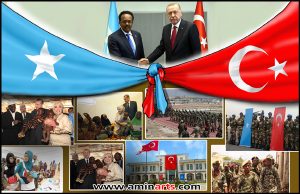
Turkey’s strategic engagement in Somalia, focusing on
how its relations with certain political groups can
negatively affect perceptions of neutrality. In this critical
study, Ylönen argues that Turkey’s close ties with specific
political factions may hinder its image as an equal partner
across the country, potentially weakening its long-term
influence (Ylönen, 2019:423-442a).
Turkey’s efforts to promote good governance norms in
Somalia have been supported by institutional capacity-
building projects. These projects, primarily implemented
through the Turkish Cooperation and Coordination
Agency (TIKA), aim not only to strengthen public
administration and law enforcement but also to establish
norms of transparency, accountability, and effective
governance in Somalia (Kurt, 2023). Additionally,
Turkey’s diplomatic presence in Somalia plays a key role
in reinforcing political relations between the two
countries. As previously mentioned, the Turkish embassy
in Mogadishu serves as an important center for
conducting diplomatic relations and coordinating
development and humanitarian aid projects in the region.
This diplomatic presence is a crucial tool for Turkey to
achieve its long-term strategic goals in Somalia (Özkan,
2021).
In light of this information, it can be argued that
Turkey’s efforts to promote democratic values and good
governance norms in Somalia contribute to peace and
stability in the region. Turkey supports peace-building
and counter-terrorism efforts within Somalia and
collaborates with the Somali government in these
processes. Undoubtedly, Turkey’s support for peace
initiatives in Somalia enhances political stability and
strengthens democratic governance systems (Kavas,
2018). Furthermore, Turkey’s training and capacity-
building projects also contribute to the dissemination and
entrenchment of democratic norms by increasing the
capacity of local governments and civil society
organizations.
Military relations
Analyzing the military relations between Turkey and
Somalia is crucial for understanding the depth, scope,
and impact of strategic cooperation between the two
countries. Turkey’s military support and training in
Somalia have a direct effect on regional security
dynamics and enhance Somalia’s national security
capacity. Moreover, as these relations are viewed as part
of Turkey’s strategy to increase its influence in Africa,
they also play a critical role in shaping regional and
international politics.
Security cooperation
Turkey is strengthening its security cooperation through
Misirli 137
its military presence in Somalia. In this regard, the
TURKSOM military training base, established in
Mogadishu in 2017, plays a crucial role in training and
equipping Somali security forces (Kavas, 2018).
TURKSOM is one of Turkey’s largest military training
facilities abroad and was created to enhance the capacity
and professionalism of the Somali army. The base is vital
in bolstering Somalia’s counter-terrorism capabilities,
particularly in the fight against al-Shabaab, which
presents serious challenges to the country. International
support is essential for Somalia’s battle against terrorism,
and Turkey provides comprehensive training to Somali
security forces through TURKSOM, enhancing their
counter-terrorism skills (Görmez, 2023). The training at
TURKSOM encompasses not only military skills but also
modern warfare techniques, strategic planning, and
logistical support.
These comprehensive programs enable Somalia’s
security forces to operate more effectively and in a
coordinated manner. Furthermore, Turkey’s military
training assistance contributes to achieving Somalia’s
long-term security and stability goals (Kavas, 2018).
Turkey’s military cooperation with Somalia is also part of
international efforts to ensure regional security and
stability. In addition to supporting Somalia’s security
forces, Turkey collaborates with other international actors
to create a comprehensive security network, effectively
addressing Somalia’s security needs (Smith and Ahmed,
2021). Moreover, Turkey’s military presence fosters
deeper strategic relations between the two countries,
paving the way for strong ties not only in security but also
in diplomatic and economic spheres. In this way, Turkey’s
military presence in Somalia reinforces the relationship of
trust between the two countries and enhances the Somali
people’s positive perception of Turkey (Özkan, 2021). In
conclusion, this military assistance contributes to
achieving Somalia’s long-term security objectives and
serves to deepen the strategic relationship between the
two countries.
Defense and security agreements
The Maritime Security Agreement between Turkey and
Somalia, signed in February 2024 for duration of ten
years, aims to significantly strengthen defense and
economic cooperation between the two countries. The
agreement grants Turkey full authority to control and
secure Somalia’s territorial waters and enables it to
undertake tasks such as monitoring maritime security
operations, assisting in rebuilding Somalia’s navy, and
combating illegal fishing activities. Additionally, the
agreement allows Turkish companies to exploit 30% of
the resources extracted from Somalia’s Blue Water
Economic Zone (Yılmaz, 2024).
Under the agreement, Turkish naval forces will
contribute to regional security by patrolling the region’s
138 Afr. J. Pol. Sci. Int. Relat.
territorial waters and coastline to help Somalia combat
terrorism, piracy, and illegal fishing. This comprehensive
security assistance seeks to enhance the country’s
coastal security, develop its maritime resources, and
contribute to the protection of Somalia’s national
independence and border security, as well as support the
uninterrupted continuation of the state-building process.
Furthermore, the agreement establishes a joint naval
force between Somalia and Turkey to protect Somali
territorial waters (Kaya, 2024).
Another significant aspect of the agreement is the
cooperation in rebuilding and modernizing the Somali
navy by the Turkish Naval Forces Command. By
strengthening the Somali navy through training and
equipment, Turkey is helping Somalia ensure its maritime
security. This cooperation enhances Somalia’s national
security capacity and contributes to regional stability
(Görmez, 2023).
Under the Maritime Security Agreement, Turkey and
Somalia have agreed to organize joint naval exercises
and exchange information and experiences related to
maritime security. These joint exercises and training
collaborations will not only strengthen Turkey’s military
presence in the region but also enhance Somalia’s
maritime capabilities, fostering a strong military
partnership based on trust between the two countries
(Smith and Ahmed, 2021).
This agreement in the field of defense and security
reinforces Turkey’s role in the region and contributes to
its perception as a reliable strategic partner in the
international arena. Turkey’s cooperation with Somalia
serves as a model for other countries in the region and
increases its influence on regional security issues as well
(Özkan, 2021).
Additionally, the agreement aims to ensure the security
of maritime trade routes in the Gulf of Aden and the Red
Sea region while increasing the economic benefits
derived from Somalia’s marine resources. In this way,
Turkey promotes the sustainable use of Somalia’s
maritime resources and provides technical and logistical
support to Somalia in this respect (Yılmaz, 2024).
Economic relations and infrastructure projects
Turkey has strengthened its economic presence in
Somalia through development and infrastructure projects,
significantly contributing to the country’s economic
development and stability. These projects provide not
only short-term humanitarian aid but also support the
long-term sustainable development goals of the Somali
population. The modernization of Mogadishu Airport is
one of the most tangible examples of Turkey’s
development initiatives in Somalia. Completed in 2013,
this modernization project greatly improved the airport’s
infrastructure and enhanced Mogadishu’s suitability for
international flights. As Somalia’s gateway to the world,
this project has helped boost the country’s economy and
increase international trade (Demirtaş, 2020). For Turkey,
the modernization of the airport has also improved the
positive perception of its presence in Somalia and
strengthened its image in the region.
Other significant Turkish development projects in
Somalia include the construction of hospitals, schools,
and roads. Turkey aims to improve the quality of health
services by establishing modern hospitals and health
centers in the country.
The Recep Tayyip Erdoğan Training and Research
Hospital, which opened in 2015, is one of the most
modern healthcare facilities in Somalia and provides
quality health services to the region’s population. This
hospital is a key indicator of Turkey’s contribution to
Somalia’s health infrastructure and is highly appreciated
by the Somali people (Kurt, 2023).
In addition to these investments, Turkey has significant
initiatives in education. The schools operated by the
Turkish Maarif Foundation offer education to thousands
of students in Somalia, contributing to the improvement of
the population’s educational level. For example, the
Somali Maarif Schools, regarded as the most successful
in the country, provide education in Hargeisa and
Mogadishu, serving 1,200 students across three
campuses (Maarif Foundation, 2024). These educational
projects positively influence the young population’s
perception of Turkey and strengthen the cultural ties
between the two countries (Smith and Ahmed, 2021).
As part of developing commercial relations between the
two countries, Turkish construction companies are
undertaking important infrastructure projects in Somalia,
including roads, bridges, ports, and other critical
elements.
These investments in the construction sector are
fundamental to Somalia’s economic development and
enhance the country’s transport and logistics capacity.
Additionally, employing local labor in these projects
enables the Somali people to contribute directly to
economic development (Demirtaş, 2020).
Simultaneously, Turkish energy companies are carrying
out various projects to develop Somalia’s energy
infrastructure. These initiatives increase energy supply
and ensure energy security in Somalia (Özkan,
2021:236-254).
Investments in renewable energy sources help Somalia
achieve its sustainable development goals and reinforce
Turkey’s environmental responsibility in the region. This
cooperation in the energy sector contributes to the
deepening of economic relations between the two
countries (Kurt, 2023).
In addition to business investment, flights organized by
Turkish Airlines (THY) to Mogadishu, the region’s main
transport artery, significantly contribute to opening
Somalia to the world. THY was the first international
airline to launch regular flights to Mogadishu in 2012,
facilitating Somalia’s integration into the global economy
territorial waters and coastline to help Somalia combat
terrorism, piracy, and illegal fishing. This comprehensive
security assistance seeks to enhance the country’s
coastal security, develop its maritime resources, and
contribute to the protection of Somalia’s national
independence and border security, as well as support the
uninterrupted continuation of the state-building process.
Furthermore, the agreement establishes a joint naval
force between Somalia and Turkey to protect Somali
territorial waters (Kaya, 2024).
Another significant aspect of the agreement is the
cooperation in rebuilding and modernizing the Somali
navy by the Turkish Naval Forces Command. By
strengthening the Somali navy through training and
equipment, Turkey is helping Somalia ensure its maritime
security. This cooperation enhances Somalia’s national
security capacity and contributes to regional stability
(Görmez, 2023).
Under the Maritime Security Agreement, Turkey and
Somalia have agreed to organize joint naval exercises
and exchange information and experiences related to
maritime security. These joint exercises and training
collaborations will not only strengthen Turkey’s military
presence in the region but also enhance Somalia’s
maritime capabilities, fostering a strong military
partnership based on trust between the two countries
(Smith and Ahmed, 2021).
This agreement in the field of defense and security
reinforces Turkey’s role in the region and contributes to
its perception as a reliable strategic partner in the
international arena. Turkey’s cooperation with Somalia
serves as a model for other countries in the region and
increases its influence on regional security issues as well
(Özkan, 2021).
Additionally, the agreement aims to ensure the security
of maritime trade routes in the Gulf of Aden and the Red
Sea region while increasing the economic benefits
derived from Somalia’s marine resources. In this way,
Turkey promotes the sustainable use of Somalia’s
maritime resources and provides technical and logistical
support to Somalia in this respect (Yılmaz, 2024).
Economic relations and infrastructure projects
Turkey has strengthened its economic presence in
Somalia through development and infrastructure projects,
significantly contributing to the country’s economic
development and stability. These projects provide not
only short-term humanitarian aid but also support the
long-term sustainable development goals of the Somali
population. The modernization of Mogadishu Airport is
one of the most tangible examples of Turkey’s
development initiatives in Somalia. Completed in 2013,
this modernization project greatly improved the airport’s
infrastructure and enhanced Mogadishu’s suitability for
international flights. As Somalia’s gateway to the world,
this project has helped boost the country’s economy and
increase international trade (Demirtaş, 2020). For Turkey,
the modernization of the airport has also improved the
positive perception of its presence in Somalia and
strengthened its image in the region.
Other significant Turkish development projects in
Somalia include the construction of hospitals, schools,
and roads. Turkey aims to improve the quality of health
services by establishing modern hospitals and health
centers in the country.
The Recep Tayyip Erdoğan Training and Research
Hospital, which opened in 2015, is one of the most
modern healthcare facilities in Somalia and provides
quality health services to the region’s population. This
hospital is a key indicator of Turkey’s contribution to
Somalia’s health infrastructure and is highly appreciated
by the Somali people (Kurt, 2023).
In addition to these investments, Turkey has significant
initiatives in education. The schools operated by the
Turkish Maarif Foundation offer education to thousands
of students in Somalia, contributing to the improvement of
the population’s educational level. For example, the
Somali Maarif Schools, regarded as the most successful
in the country, provide education in Hargeisa and
Mogadishu, serving 1,200 students across three
campuses (Maarif Foundation, 2024). These educational
projects positively influence the young population’s
perception of Turkey and strengthen the cultural ties
between the two countries (Smith and Ahmed, 2021).
As part of developing commercial relations between the
two countries, Turkish construction companies are
undertaking important infrastructure projects in Somalia,
including roads, bridges, ports, and other critical
elements.
These investments in the construction sector are
fundamental to Somalia’s economic development and
enhance the country’s transport and logistics capacity.
Additionally, employing local labor in these projects
enables the Somali people to contribute directly to
economic development (Demirtaş, 2020).
Simultaneously, Turkish energy companies are carrying
out various projects to develop Somalia’s energy
infrastructure. These initiatives increase energy supply
and ensure energy security in Somalia (Özkan,
2021:236-254).
Investments in renewable energy sources help Somalia
achieve its sustainable development goals and reinforce
Turkey’s environmental responsibility in the region. This
cooperation in the energy sector contributes to the
deepening of economic relations between the two
countries (Kurt, 2023).
In addition to business investment, flights organized by
Turkish Airlines (THY) to Mogadishu, the region’s main
transport artery, significantly contribute to opening
Somalia to the world. THY was the first international
airline to launch regular flights to Mogadishu in 2012,
facilitating Somalia’s integration into the global economy
and increasing the country’s foreign trade volume. THY’s
flights not only support economic coordination but also
enhance humanitarian aid and development activities as
elements of soft power, thereby increasing Turkey’s
influence in Somalia (Smith and Ahmed, 2021).
The volume of trade between Turkey and Somalia has
been steadily increasing in recent years, thanks to both
private sector investment and the diplomatic efforts
associated with flights that integrate Somalia into the
global economy. Turkish companies export various
products to Somalia, meeting the country’s needs and
providing the Somali market with high-quality goods. At
the same time, imports from Somalia to Turkey contribute
to the balanced development of economic relations
between the two countries. These trade relations
increase interdependence between the economies and
promote long-term economic cooperation (Demirtaş,
2020).
Turkey and Somalia have signed several agreements
to enhance mutual economic cooperation. The first
initiative was the Turkey-Somalia Business Forum
organized by Deik within the framework of the “Friends of
Somalia Conference,” which has fostered mutual
economic relations since that period (Deik, 2024). These
agreements facilitate the flow of trade and investment
between the two countries and ensure the development
of economic relations within an institutional framework.
The trade agreements provide opportunities for Turkish
companies to invest in Somalia and support economic
development projects, thereby strengthening economic
ties and helping Somalia achieve its sustainable
development goals (Kaya, 2024).
Undoubtedly, the activities of Turkish companies in
Somalia contribute directly to the local economy. To this
end, the Deik/Turkey-Somalia Business Council was
established on September 18, 2015, through an
agreement signed between Deik and the Somali
Chamber of Commerce and Industry (SCCI). The Council
has conducted a series of activities, including business
forums, delegation visits, meetings, and seminars, to
enhance Turkey’s economic relations with Somalia (Deik,
2024). In this context, the employment of local labor by
Turkish companies in their projects has contributed to
revitalizing the local economy, actively engaging the
community in economic development, and improving the
welfare of the Somali people, whose economy largely
relies on agriculture and livestock. This aligns with
Turkey’s approach to sustainable development in
Somalia and is welcomed by local communities (Özkan,
2021).
UAE RELATIONS WITH SOMALIA
Analyzing the relations between the United Arab
Emirates (UAE) and Somalia is crucial for understanding
regional security dynamics and economic strategies.
Misirli 139
Recently, the UAE’s investments and humanitarian
assistance in Somalia have contributed to the deepening
of economic relations between the two countries. The
UAE’s strategic investments in infrastructure projects
support Somalia’s economic development while
reinforcing efforts to ensure regional security. In this
context, examining the relations between the two
countries provides a critical perspective for understanding
the balance of power and strategic interactions within the
Horn of Africa region.
Political relations
Identity and perceptions
The United Arab Emirates (UAE) seeks to create a
unique perception in Somalia by emphasizing its modern
Arab identity and economic power projection (Smith and
Ahmed, 2021). The UAE’s economic investments and
security cooperation in Somalia reinforce this perception
and strengthen its strategic position in the country. In this
context, the UAE’s activities in Somalia are seen as part
of its strategy to project its modern Arab identity and
economic influence.
The UAE’s efforts to build a modern Arab identity in
Somalia also strengthen its relations with other Arab
countries in the region and enhance Somalia’s visibility as
part of the Arab world. By emphasizing Arab solidarity
and unity in its economic and political projects in Somalia,
the UAE aims to create a positive perception among the
Somali people (Cherkas and Novytska, 2023).
Undoubtedly, the UAE’s economic investments in
Somalia play an important role in the development of the
country’s infrastructure and economy. In particular, the
Berbera Port Modernization and Expansion Project is one
of the UAE’s most notable investments in Somalia. This
port project will increase Somalia’s maritime trade
capacity and contribute to the country’s economic
development. Such large-scale investments support
Somalia’s economic growth and strengthen the UAE’s
economic power projection in the region (Smith and
Ahmed, 2021).
Security cooperation is another important tool for the
UAE in consolidating its strategic presence and modern
Arab identity in Somalia. To this end, the UAE provides
training and equipment support to Somali security forces,
enhancing the country’s security capacity. The UAE’s
support in this area significantly contributes to stability
and security in Somalia and enhances the UAE’s
influence in the region as a whole. Notably, the newly
elected President of Somalia, Hassan Sheikh Mahmud,
made his first foreign visit to the UAE in 2022, which
serves as an indicator of the UAE’s political influence in
Somalia (mofa.gov.ae, 2022).
The UAE’s social projects in Somalia, such as those in
education and health, also play an important role in
flights not only support economic coordination but also
enhance humanitarian aid and development activities as
elements of soft power, thereby increasing Turkey’s
influence in Somalia (Smith and Ahmed, 2021).
The volume of trade between Turkey and Somalia has
been steadily increasing in recent years, thanks to both
private sector investment and the diplomatic efforts
associated with flights that integrate Somalia into the
global economy. Turkish companies export various
products to Somalia, meeting the country’s needs and
providing the Somali market with high-quality goods. At
the same time, imports from Somalia to Turkey contribute
to the balanced development of economic relations
between the two countries. These trade relations
increase interdependence between the economies and
promote long-term economic cooperation (Demirtaş,
2020).
Turkey and Somalia have signed several agreements
to enhance mutual economic cooperation. The first
initiative was the Turkey-Somalia Business Forum
organized by Deik within the framework of the “Friends of
Somalia Conference,” which has fostered mutual
economic relations since that period (Deik, 2024). These
agreements facilitate the flow of trade and investment
between the two countries and ensure the development
of economic relations within an institutional framework.
The trade agreements provide opportunities for Turkish
companies to invest in Somalia and support economic
development projects, thereby strengthening economic
ties and helping Somalia achieve its sustainable
development goals (Kaya, 2024).
Undoubtedly, the activities of Turkish companies in
Somalia contribute directly to the local economy. To this
end, the Deik/Turkey-Somalia Business Council was
established on September 18, 2015, through an
agreement signed between Deik and the Somali
Chamber of Commerce and Industry (SCCI). The Council
has conducted a series of activities, including business
forums, delegation visits, meetings, and seminars, to
enhance Turkey’s economic relations with Somalia (Deik,
2024). In this context, the employment of local labor by
Turkish companies in their projects has contributed to
revitalizing the local economy, actively engaging the
community in economic development, and improving the
welfare of the Somali people, whose economy largely
relies on agriculture and livestock. This aligns with
Turkey’s approach to sustainable development in
Somalia and is welcomed by local communities (Özkan,
2021).
UAE RELATIONS WITH SOMALIA
Analyzing the relations between the United Arab
Emirates (UAE) and Somalia is crucial for understanding
regional security dynamics and economic strategies.
Misirli 139
Recently, the UAE’s investments and humanitarian
assistance in Somalia have contributed to the deepening
of economic relations between the two countries. The
UAE’s strategic investments in infrastructure projects
support Somalia’s economic development while
reinforcing efforts to ensure regional security. In this
context, examining the relations between the two
countries provides a critical perspective for understanding
the balance of power and strategic interactions within the
Horn of Africa region.
Political relations
Identity and perceptions
The United Arab Emirates (UAE) seeks to create a
unique perception in Somalia by emphasizing its modern
Arab identity and economic power projection (Smith and
Ahmed, 2021). The UAE’s economic investments and
security cooperation in Somalia reinforce this perception
and strengthen its strategic position in the country. In this
context, the UAE’s activities in Somalia are seen as part
of its strategy to project its modern Arab identity and
economic influence.
The UAE’s efforts to build a modern Arab identity in
Somalia also strengthen its relations with other Arab
countries in the region and enhance Somalia’s visibility as
part of the Arab world. By emphasizing Arab solidarity
and unity in its economic and political projects in Somalia,
the UAE aims to create a positive perception among the
Somali people (Cherkas and Novytska, 2023).
Undoubtedly, the UAE’s economic investments in
Somalia play an important role in the development of the
country’s infrastructure and economy. In particular, the
Berbera Port Modernization and Expansion Project is one
of the UAE’s most notable investments in Somalia. This
port project will increase Somalia’s maritime trade
capacity and contribute to the country’s economic
development. Such large-scale investments support
Somalia’s economic growth and strengthen the UAE’s
economic power projection in the region (Smith and
Ahmed, 2021).
Security cooperation is another important tool for the
UAE in consolidating its strategic presence and modern
Arab identity in Somalia. To this end, the UAE provides
training and equipment support to Somali security forces,
enhancing the country’s security capacity. The UAE’s
support in this area significantly contributes to stability
and security in Somalia and enhances the UAE’s
influence in the region as a whole. Notably, the newly
elected President of Somalia, Hassan Sheikh Mahmud,
made his first foreign visit to the UAE in 2022, which
serves as an indicator of the UAE’s political influence in
Somalia (mofa.gov.ae, 2022).
The UAE’s social projects in Somalia, such as those in
education and health, also play an important role in
140 Afr. J. Pol. Sci. Int. Relat.
building a modern Arab identity. By opening schools and
health centers, the UAE is increasing access to education
and health services for the Somali people. One concrete
example is the UAE government’s donation of $50 million
to the Somali central government in 2013 to improve
schools and health services throughout the country
(Wardheernews.com, 2013). These projects support
social development in Somalia and reinforce the positive
perception of the UAE in humanitarian aid and
development fields (Cherkas and Novytska, 2023).
The UAE’s activities in Somalia extend beyond its
modern Arab identity and economic power projection;
they also encompass strategic and geopolitical objectives
in the region. In this context, the UAE aims to control and
secure maritime trade routes in the Red Sea and Indian
Ocean by leveraging Somalia’s strategic location. These
strategic objectives further strengthen the UAE’s military
and economic presence in Somalia and shape the
geopolitical dynamics of the region (Smith and Ahmed,
2021).
Norms and values
The United Arab Emirates (UAE) has been promoting
political stability and security norms in the Somalia region
(Sahin, 2019). It is argued that the UAE’s political support
and security cooperation contribute significantly to
maintaining and enhancing stability in Somalia (Abdullahi
and Hassan, 2020). The UAE has taken important steps
to ensure the political stability of the country through
direct political engagement with the Somali government.
In this context, the UAE’s support for electoral processes
and political reforms contributes to Somalia’s
democratization. Additionally, the opening of the UAE
Embassy in Mogadishu institutionalizes diplomatic
relations with Somalia and allows for a more systematic
approach to cooperation between the two countries. This
diplomatic presence serves the UAE’s strategic
objectives in Somalia and increases its influence in the
region (Smith and Ahmed, 2021).
The UAE is implementing various projects and
programs aimed at promoting stability and security norms
in Somalia. These projects include capacity-building
activities that contribute to Somalia’s internal security and
counter-terrorism operations. By providing training and
logistical support to Somali security forces, the UAE
strengthened the country’s security infrastructure and
increased its effectiveness in combating terrorism until its
military base was closed in 2018.
Furthermore, the UAE’s security cooperation is
coordinated with other international actors in the region,
contributing to peace and stability (Şahin, 2019). Until the
closure of its base, the UAE met the training and
equipment needs of the Somali security forces, further
enhancing Somalia’s security capacity (Abdullahi and
Hassan, 2020).
In addition to counter-terrorism efforts, the UAE
supports stability and security norms through economic
and social development projects. Economic development
is considered one of the key elements of social stability;
therefore, the UAE contributes to economic development
through infrastructure projects and investments in health
and education in Somalia. These projects promote
Somalia’s economic growth and improve the welfare of
various segments of society.
Moreover, the UAE’s social projects aim to enhance the
quality of life for the Somali people and ensure long-term
social stability (Cherkas and Novytska, 2023).
Undoubtedly, the UAE’s activities in Somalia also play a
vital role in regional security dynamics. In line with its
objective of securing maritime trade routes in the Red
Sea and the Indian Ocean, the UAE is strengthening
security and stability in the region by leveraging
Somalia’s strategic location. The UAE’s focus on maritime
security projects and port investments in Somalia is seen
as part of these regional security strategies (Smith and
Ahmed, 2021).
Military relations
Security cooperation
The UAE has a significant military presence in Somalia,
and its military training facility in Mogadishu, which
operated until 2018, played an important role in training
and equipping Somali security forces (Middle East
Monitor, 2024). The facility was established to help
modernize and professionalize the Somali army and
improve Somalia’s counter-terrorism capabilities. By
providing comprehensive training, the facility enhanced
the operational capabilities of security forces and enabled
them to operate in a more effective and coordinated
manner through instruction in modern military tactics,
strategic planning, and logistical support (Smith and
Ahmed, 2021). However, political tensions between the
two countries in 2018 led to the closure of the military
training facility due to the Somali government’s
confiscation of funds belonging to the UAE government.
This development reflects the dynamics of the military
relationship between the two countries. Consequently,
the confiscation of funds and the closure of the military
facility weakened security cooperation between the UAE
and Somalia and increased tensions in their military
relations. This situation highlights the challenges facing
the sustainability of the UAE’s military presence and
security cooperation within Somali territory (Middle East
Monitor, 2024).
The UAE’s security cooperation in Somalia is not
limited to military training and hardware support; it also
includes areas such as intelligence sharing and logistical
assistance. For example, through the intelligence support
it provides to Somali security forces, the UAE plays an
building a modern Arab identity. By opening schools and
health centers, the UAE is increasing access to education
and health services for the Somali people. One concrete
example is the UAE government’s donation of $50 million
to the Somali central government in 2013 to improve
schools and health services throughout the country
(Wardheernews.com, 2013). These projects support
social development in Somalia and reinforce the positive
perception of the UAE in humanitarian aid and
development fields (Cherkas and Novytska, 2023).
The UAE’s activities in Somalia extend beyond its
modern Arab identity and economic power projection;
they also encompass strategic and geopolitical objectives
in the region. In this context, the UAE aims to control and
secure maritime trade routes in the Red Sea and Indian
Ocean by leveraging Somalia’s strategic location. These
strategic objectives further strengthen the UAE’s military
and economic presence in Somalia and shape the
geopolitical dynamics of the region (Smith and Ahmed,
2021).
Norms and values
The United Arab Emirates (UAE) has been promoting
political stability and security norms in the Somalia region
(Sahin, 2019). It is argued that the UAE’s political support
and security cooperation contribute significantly to
maintaining and enhancing stability in Somalia (Abdullahi
and Hassan, 2020). The UAE has taken important steps
to ensure the political stability of the country through
direct political engagement with the Somali government.
In this context, the UAE’s support for electoral processes
and political reforms contributes to Somalia’s
democratization. Additionally, the opening of the UAE
Embassy in Mogadishu institutionalizes diplomatic
relations with Somalia and allows for a more systematic
approach to cooperation between the two countries. This
diplomatic presence serves the UAE’s strategic
objectives in Somalia and increases its influence in the
region (Smith and Ahmed, 2021).
The UAE is implementing various projects and
programs aimed at promoting stability and security norms
in Somalia. These projects include capacity-building
activities that contribute to Somalia’s internal security and
counter-terrorism operations. By providing training and
logistical support to Somali security forces, the UAE
strengthened the country’s security infrastructure and
increased its effectiveness in combating terrorism until its
military base was closed in 2018.
Furthermore, the UAE’s security cooperation is
coordinated with other international actors in the region,
contributing to peace and stability (Şahin, 2019). Until the
closure of its base, the UAE met the training and
equipment needs of the Somali security forces, further
enhancing Somalia’s security capacity (Abdullahi and
Hassan, 2020).
In addition to counter-terrorism efforts, the UAE
supports stability and security norms through economic
and social development projects. Economic development
is considered one of the key elements of social stability;
therefore, the UAE contributes to economic development
through infrastructure projects and investments in health
and education in Somalia. These projects promote
Somalia’s economic growth and improve the welfare of
various segments of society.
Moreover, the UAE’s social projects aim to enhance the
quality of life for the Somali people and ensure long-term
social stability (Cherkas and Novytska, 2023).
Undoubtedly, the UAE’s activities in Somalia also play a
vital role in regional security dynamics. In line with its
objective of securing maritime trade routes in the Red
Sea and the Indian Ocean, the UAE is strengthening
security and stability in the region by leveraging
Somalia’s strategic location. The UAE’s focus on maritime
security projects and port investments in Somalia is seen
as part of these regional security strategies (Smith and
Ahmed, 2021).
Military relations
Security cooperation
The UAE has a significant military presence in Somalia,
and its military training facility in Mogadishu, which
operated until 2018, played an important role in training
and equipping Somali security forces (Middle East
Monitor, 2024). The facility was established to help
modernize and professionalize the Somali army and
improve Somalia’s counter-terrorism capabilities. By
providing comprehensive training, the facility enhanced
the operational capabilities of security forces and enabled
them to operate in a more effective and coordinated
manner through instruction in modern military tactics,
strategic planning, and logistical support (Smith and
Ahmed, 2021). However, political tensions between the
two countries in 2018 led to the closure of the military
training facility due to the Somali government’s
confiscation of funds belonging to the UAE government.
This development reflects the dynamics of the military
relationship between the two countries. Consequently,
the confiscation of funds and the closure of the military
facility weakened security cooperation between the UAE
and Somalia and increased tensions in their military
relations. This situation highlights the challenges facing
the sustainability of the UAE’s military presence and
security cooperation within Somali territory (Middle East
Monitor, 2024).
The UAE’s security cooperation in Somalia is not
limited to military training and hardware support; it also
includes areas such as intelligence sharing and logistical
assistance. For example, through the intelligence support
it provides to Somali security forces, the UAE plays an
active role in planning and executing counter-terrorism
operations. Additionally, by offering logistical support, the
UAE enhances the operational capacity of Somali
security forces and strengthens their effectiveness in the
field (Middle East Monitor, 2024). Undoubtedly, the UAE’s
military presence in Somalia aims to achieve its
geopolitical objectives in the region and ensure the
security of maritime trade routes in the Indian Ocean.
These strategic objectives increase the significance of
the UAE’s military presence in Somalia and emphasize
the need to consolidate its influence in the region (Smith
and Ahmed, 2021).
In conclusion, while the UAE’s military presence and
security cooperation in Somalia play an important role in
enhancing the country’s security capacity and counter-
terrorism efforts, the closure of the military training facility
in Mogadishu in 2018 is a significant development that
reflects the dynamics of the military relationship between
the two countries. This situation underscores the
challenges to the sustainability of the UAE’s military
presence in Somalia and highlights the necessity of
ensuring the continuity of security cooperation.
Defense and security agreements
The UAE’s security agreements with the Somali
government cover several areas aimed at ensuring
Somalia’s internal security. Under these agreements, the
UAE provides training, equipment, and logistical support
to Somali security forces. These training programs help
the forces become proficient in modern warfare
techniques and strategic planning, improving their
operational capabilities. The UAE’s support enhances
Somalia’s effectiveness in combating terrorism and
ensuring its internal security (Abdullahi and Hassan,
2020). Overall, these security agreements contribute to
Somalia’s internal stability and increase the counter-
terrorism capacity of the security forces.
However, the fact that the same security arrangements
are also in place with other local governments affiliated
with the Somali central government deserves attention for
its impact on regional dynamics. The UAE extends these
security agreements not only to Mogadishu but also to
autonomous regions such as Somaliland, which
significantly affects the security dynamics in the region
and creates dissatisfaction in the eyes of the Somali
central government. In this context, the security
agreements with the autonomous Somaliland region
meet the training and equipment needs of Somaliland’s
security forces and enhance the internal security of the
region. Furthermore, the UAE’s port and maritime
security project in Somaliland is an important step toward
ensuring the security of maritime trade routes (Reliefweb,
2018).
The UAE’s Berbera Port project with Somaliland is one
of the most prominent examples of these security
Misirli 141
agreements. The project involves the modernization and
expansion of the port and the provision of port security.
Through this port project, the UAE aims to enhance the
security of maritime trade routes in the Indian Ocean and
promote economic development in the region. However,
this situation has provoked negative reactions from the
Somali central government, which perceives it as a threat
to its national sovereignty, leading to a crisis of trust
between the two countries.
It is crucial that this study addresses these issues
within the context of the rivalry between Turkey and the
UAE, as the main theme of the article is to highlight the
implications of this rivalry by examining the positive and
negative aspects of the involvement of two significant
regional actors, Turkey and the UAE, in Somalia.
Economic relations and infrastructure projects
The United Arab Emirates (UAE) is seeking to strengthen
its economic presence in Somalia through development
and infrastructure projects. By investing in this area, the
UAE is not only promoting economic growth in Somalia
but also increasing its strategic influence in the region.
One of the most tangible examples of the UAE’s
economic engagements in Somalia is the transfer of the
operating rights of the Berbera port to the UAE-owned
company DP World (Cherkas and Novytska, 2023). This
project involves the modernization and expansion of the
port, significantly increasing Somalia’s maritime trade
capacity. Additionally, the modernization of the port has
elevated Somalia’s strategic importance and facilitated
the country’s integration into global trade networks (Smith
and Ahmed, 2021).
Within the framework of its health investments in the
region, the UAE has built two hospitals in Somalia: the
Sheikh
Zayed Hospital in Mogadishu and a specialist women’s
hospital in Berbera (Reliefweb, 2021). These hospitals
are part of the UAE’s initiatives to support Somalia’s
health sector and are among the most tangible examples
of this support. In addition to health sector projects, the
UAE invests heavily in Somalia’s education sector. UAE
aid agencies have played a crucial role in building several
schools and promoting education in the country. These
initiatives aim to address the infrastructural deficiencies
of existing schools, improve the quality of education, and
enhance educational opportunities for children in the
region. UAE philanthropic organizations work to increase
educational access by building schools in various villages
and towns in Somalia. These projects are designed to
meet the needs of the local population and include
providing financial support for educational materials and
necessary resources.
A concrete example of the UAE’s health diplomacy in
Somalia is the Digital School Project in East Africa, a
hybrid education initiative conducted in partnership with
operations. Additionally, by offering logistical support, the
UAE enhances the operational capacity of Somali
security forces and strengthens their effectiveness in the
field (Middle East Monitor, 2024). Undoubtedly, the UAE’s
military presence in Somalia aims to achieve its
geopolitical objectives in the region and ensure the
security of maritime trade routes in the Indian Ocean.
These strategic objectives increase the significance of
the UAE’s military presence in Somalia and emphasize
the need to consolidate its influence in the region (Smith
and Ahmed, 2021).
In conclusion, while the UAE’s military presence and
security cooperation in Somalia play an important role in
enhancing the country’s security capacity and counter-
terrorism efforts, the closure of the military training facility
in Mogadishu in 2018 is a significant development that
reflects the dynamics of the military relationship between
the two countries. This situation underscores the
challenges to the sustainability of the UAE’s military
presence in Somalia and highlights the necessity of
ensuring the continuity of security cooperation.
Defense and security agreements
The UAE’s security agreements with the Somali
government cover several areas aimed at ensuring
Somalia’s internal security. Under these agreements, the
UAE provides training, equipment, and logistical support
to Somali security forces. These training programs help
the forces become proficient in modern warfare
techniques and strategic planning, improving their
operational capabilities. The UAE’s support enhances
Somalia’s effectiveness in combating terrorism and
ensuring its internal security (Abdullahi and Hassan,
2020). Overall, these security agreements contribute to
Somalia’s internal stability and increase the counter-
terrorism capacity of the security forces.
However, the fact that the same security arrangements
are also in place with other local governments affiliated
with the Somali central government deserves attention for
its impact on regional dynamics. The UAE extends these
security agreements not only to Mogadishu but also to
autonomous regions such as Somaliland, which
significantly affects the security dynamics in the region
and creates dissatisfaction in the eyes of the Somali
central government. In this context, the security
agreements with the autonomous Somaliland region
meet the training and equipment needs of Somaliland’s
security forces and enhance the internal security of the
region. Furthermore, the UAE’s port and maritime
security project in Somaliland is an important step toward
ensuring the security of maritime trade routes (Reliefweb,
2018).
The UAE’s Berbera Port project with Somaliland is one
of the most prominent examples of these security
Misirli 141
agreements. The project involves the modernization and
expansion of the port and the provision of port security.
Through this port project, the UAE aims to enhance the
security of maritime trade routes in the Indian Ocean and
promote economic development in the region. However,
this situation has provoked negative reactions from the
Somali central government, which perceives it as a threat
to its national sovereignty, leading to a crisis of trust
between the two countries.
It is crucial that this study addresses these issues
within the context of the rivalry between Turkey and the
UAE, as the main theme of the article is to highlight the
implications of this rivalry by examining the positive and
negative aspects of the involvement of two significant
regional actors, Turkey and the UAE, in Somalia.
Economic relations and infrastructure projects
The United Arab Emirates (UAE) is seeking to strengthen
its economic presence in Somalia through development
and infrastructure projects. By investing in this area, the
UAE is not only promoting economic growth in Somalia
but also increasing its strategic influence in the region.
One of the most tangible examples of the UAE’s
economic engagements in Somalia is the transfer of the
operating rights of the Berbera port to the UAE-owned
company DP World (Cherkas and Novytska, 2023). This
project involves the modernization and expansion of the
port, significantly increasing Somalia’s maritime trade
capacity. Additionally, the modernization of the port has
elevated Somalia’s strategic importance and facilitated
the country’s integration into global trade networks (Smith
and Ahmed, 2021).
Within the framework of its health investments in the
region, the UAE has built two hospitals in Somalia: the
Sheikh
Zayed Hospital in Mogadishu and a specialist women’s
hospital in Berbera (Reliefweb, 2021). These hospitals
are part of the UAE’s initiatives to support Somalia’s
health sector and are among the most tangible examples
of this support. In addition to health sector projects, the
UAE invests heavily in Somalia’s education sector. UAE
aid agencies have played a crucial role in building several
schools and promoting education in the country. These
initiatives aim to address the infrastructural deficiencies
of existing schools, improve the quality of education, and
enhance educational opportunities for children in the
region. UAE philanthropic organizations work to increase
educational access by building schools in various villages
and towns in Somalia. These projects are designed to
meet the needs of the local population and include
providing financial support for educational materials and
necessary resources.
A concrete example of the UAE’s health diplomacy in
Somalia is the Digital School Project in East Africa, a
hybrid education initiative conducted in partnership with
142 Afr. J. Pol. Sci. Int. Relat.
the World Food Programme (WFP) (WFP.org, 2023). The
UAE is also implementing projects to develop Somalia’s
energy infrastructure. These projects include upgrading
Somalia’s power grid, establishing power generation
facilities, investing in renewable energy solar projects,
and improving energy distribution networks. These
energy initiatives aim to ensure Somalia’s energy security
and reduce energy costs, enabling the development of
the industrial and agricultural sectors to meet urgent
energy needs and promote overall economic growth
(Cherkas and Novytska, 2023).
Somalia’s energy sector is completely decentralized,
consisting largely of small privately-owned power
companies that have developed in an unregulated
government environment, each operating mini-grids to
meet the electricity needs of their communities (Chen and
Aynte, 2022). The lack of electricity infrastructure in rural
areas, coupled with the reliance on small-scale diesel
and generator-based operations, disrupts the social
needs of the local population, such as education and
shelter. The UAE’s investment in this field and its efforts
to develop the alternative energy sector are vital for
Somali society in meeting basic needs and improving
infrastructure. In this regard, the joint agreement between
the UAE and Somalia to develop the energy and mining
sectors, implemented in 2024, exemplifies this
commitment. The Abu Dhabi Fund for Development
(ADFD) has made significant strides in developing
Somalia’s energy infrastructure with the inauguration of a
newly funded solar power project, which has delivered an
impressive 3.5 megawatts of generation capacity focused
on meeting the power needs of Bosaso, the vibrant
commercial center of Puntland State (Africa Energy
Council, 2024).
DISCUSSION
The conceptual framework of this study, based on
constructivist theory, is clearly linked to the practical
aspects of Turkey and the UAE’s policies in Somalia.
Constructivism emphasizes that state behavior is shaped
by social identities, norms, and perceptions rather than
material interests. In this regard, this theoretical
framework can be directly applied to compare Turkey and
the UAE’s engagement in the political, security, and
normative domains. For example, Turkey’s emphasis on
humanitarian aid, development projects, and military
training in Somalia is deeply connected to its identity as a
Muslim-majority nation with historical ties to the region,
which is a central element of the constructivist approach.
These considerations stem from Turkey’s normative
goal of promoting peace and development, which it
leverages to shape its image as a cooperative regional
power.
On the other hand, the UAE’s focus on security
cooperation and direct economic investment, such as
port management agreements, reflects its strategic goal
of maintaining a modern Arab identity and ensuring
regional stability. This form of engagement aligns with the
constructivist approach, where norms such as security
and stability drive state behavior and influence
international relations accordingly. In other words, the link
between theory and practice becomes clearer as these
actions are explicitly tied to the social and normative
structures outlined in the constructivist framework. The
parameters used to theoretically compare the two
countries’ engagement in the region—such as political
influence, security cooperation, and normative values—
are derived from an exploration of how both states project
their identities and pursue their normative goals in
Somalia. Thus, the findings provide a coherent and well-
integrated analysis of the competition between Turkey
and the UAE in the region.
The evaluation in the previous paragraphs
demonstrates that the findings from this study reveal a
multidimensional understanding of the Turkey-UAE rivalry
in Somalia and its broader implications for regional
dynamics. By applying constructivist theory, it becomes
evident that the rivalry between these two regional
powers is not solely about material interests or strategic
dominance; it also has deep bilateral roots in the region’s
identity, norms, and social perceptions.
As noted earlier, the competition between Turkey and
the UAE in Somalia exemplifies how international
relations are shaped by factors beyond mere power
politics. Another significant aspect of this example is that
it encompasses cultural, historical, and ideological factors
that influence the behavior and decision-making of the
actors involved, within the framework of the conceptual
approach presented above.
One of the key findings is the identification of how
Turkey’s engagement in Somalia, rooted in its historical
ties to the Ottoman Empire and its Muslim identity, has
evolved into strong mutual relations through humanitarian
aid, infrastructure projects, and soft power diplomacy.
These findings align with constructivist theory, which
posits that the identities and values projected by nations
shape their interactions on the global stage. Turkey’s
self-presentation as a benevolent actor promoting peace
and cooperation in the region exemplifies a strategic soft
power approach that has effectively garnered the favor of
local actors in Somalia. This supports Wendt’s (1999)
assertion that international politics is socially constructed.
Accordingly, Turkey’s role in Somalia is closely linked not
only to the material aid it provides but also to how it is
perceived by local communities.
In contrast, the UAE’s emphasis on stability and
security, combined with its modern Arab identity and
economic strength, reflects a different set of norms and
values. The UAE has concentrated on port development,
security cooperation, and investment, underscoring its
identity as a modern and stable regional power. This
divergence in the two countries’ approaches to the region
the World Food Programme (WFP) (WFP.org, 2023). The
UAE is also implementing projects to develop Somalia’s
energy infrastructure. These projects include upgrading
Somalia’s power grid, establishing power generation
facilities, investing in renewable energy solar projects,
and improving energy distribution networks. These
energy initiatives aim to ensure Somalia’s energy security
and reduce energy costs, enabling the development of
the industrial and agricultural sectors to meet urgent
energy needs and promote overall economic growth
(Cherkas and Novytska, 2023).
Somalia’s energy sector is completely decentralized,
consisting largely of small privately-owned power
companies that have developed in an unregulated
government environment, each operating mini-grids to
meet the electricity needs of their communities (Chen and
Aynte, 2022). The lack of electricity infrastructure in rural
areas, coupled with the reliance on small-scale diesel
and generator-based operations, disrupts the social
needs of the local population, such as education and
shelter. The UAE’s investment in this field and its efforts
to develop the alternative energy sector are vital for
Somali society in meeting basic needs and improving
infrastructure. In this regard, the joint agreement between
the UAE and Somalia to develop the energy and mining
sectors, implemented in 2024, exemplifies this
commitment. The Abu Dhabi Fund for Development
(ADFD) has made significant strides in developing
Somalia’s energy infrastructure with the inauguration of a
newly funded solar power project, which has delivered an
impressive 3.5 megawatts of generation capacity focused
on meeting the power needs of Bosaso, the vibrant
commercial center of Puntland State (Africa Energy
Council, 2024).
DISCUSSION
The conceptual framework of this study, based on
constructivist theory, is clearly linked to the practical
aspects of Turkey and the UAE’s policies in Somalia.
Constructivism emphasizes that state behavior is shaped
by social identities, norms, and perceptions rather than
material interests. In this regard, this theoretical
framework can be directly applied to compare Turkey and
the UAE’s engagement in the political, security, and
normative domains. For example, Turkey’s emphasis on
humanitarian aid, development projects, and military
training in Somalia is deeply connected to its identity as a
Muslim-majority nation with historical ties to the region,
which is a central element of the constructivist approach.
These considerations stem from Turkey’s normative
goal of promoting peace and development, which it
leverages to shape its image as a cooperative regional
power.
On the other hand, the UAE’s focus on security
cooperation and direct economic investment, such as
port management agreements, reflects its strategic goal
of maintaining a modern Arab identity and ensuring
regional stability. This form of engagement aligns with the
constructivist approach, where norms such as security
and stability drive state behavior and influence
international relations accordingly. In other words, the link
between theory and practice becomes clearer as these
actions are explicitly tied to the social and normative
structures outlined in the constructivist framework. The
parameters used to theoretically compare the two
countries’ engagement in the region—such as political
influence, security cooperation, and normative values—
are derived from an exploration of how both states project
their identities and pursue their normative goals in
Somalia. Thus, the findings provide a coherent and well-
integrated analysis of the competition between Turkey
and the UAE in the region.
The evaluation in the previous paragraphs
demonstrates that the findings from this study reveal a
multidimensional understanding of the Turkey-UAE rivalry
in Somalia and its broader implications for regional
dynamics. By applying constructivist theory, it becomes
evident that the rivalry between these two regional
powers is not solely about material interests or strategic
dominance; it also has deep bilateral roots in the region’s
identity, norms, and social perceptions.
As noted earlier, the competition between Turkey and
the UAE in Somalia exemplifies how international
relations are shaped by factors beyond mere power
politics. Another significant aspect of this example is that
it encompasses cultural, historical, and ideological factors
that influence the behavior and decision-making of the
actors involved, within the framework of the conceptual
approach presented above.
One of the key findings is the identification of how
Turkey’s engagement in Somalia, rooted in its historical
ties to the Ottoman Empire and its Muslim identity, has
evolved into strong mutual relations through humanitarian
aid, infrastructure projects, and soft power diplomacy.
These findings align with constructivist theory, which
posits that the identities and values projected by nations
shape their interactions on the global stage. Turkey’s
self-presentation as a benevolent actor promoting peace
and cooperation in the region exemplifies a strategic soft
power approach that has effectively garnered the favor of
local actors in Somalia. This supports Wendt’s (1999)
assertion that international politics is socially constructed.
Accordingly, Turkey’s role in Somalia is closely linked not
only to the material aid it provides but also to how it is
perceived by local communities.
In contrast, the UAE’s emphasis on stability and
security, combined with its modern Arab identity and
economic strength, reflects a different set of norms and
values. The UAE has concentrated on port development,
security cooperation, and investment, underscoring its
identity as a modern and stable regional power. This
divergence in the two countries’ approaches to the region
is significant, as it highlights how norms can shape
foreign policy strategies differently, even when the
ultimate goal—regional influence—remains the same.
According to Finnemore and Sikkink’s (1998) model of
norm dynamics, the UAE seeks to reshape the regional
order by embedding norms of security and stability that
align with its broader geopolitical objectives. However,
the UAE’s support for the independence of the disputed
autonomous region of Somaliland through port
agreements has created tensions with Somalia’s central
government in Mogadishu. This situation underscores
how foreign interventions based on economic and
security norms can sometimes fragment local political
structures.
The findings also challenge the assumption that
regional power dynamics are driven solely by economic
or military competition. As demonstrated in this study,
identity politics and normative influence play crucial roles
in shaping local perceptions and alliances, thereby
affecting regional politics and international relations.
While Turkey positions itself as a long-term partner
through development assistance and cultural ties, some
critics point to its close relationships with certain political
groups, which could potentially undermine its neutrality in
Somalia in the long run (Barnes, 2016). These criticisms
echo the arguments of scholars such as Hopf (2002),
who emphasize the complex interplay between identity
and foreign policy in shaping international relations.
These considerations raise questions about the
sustainability of Turkey’s long-term influence in Somalia,
especially if its identity as a neutral actor is jeopardized.
The study also found that local actors in Somalia
played an active role in interpreting and responding to the
norms and identity projections implemented by Turkey
and the UAE in the region. These findings highlight the
importance of constructivist perspectives in
understanding not only the hierarchical, top-down
imposition of norms by powerful states but also how
these norms are perceived and internalized by local
actors. Ultimately, the findings suggest that local elites in
Somalia consider Turkey a more reliable partner due to
its emphasis on humanitarian aid and religious solidarity,
while the UAE is perceived as more pragmatic and
security-oriented, particularly because of its focus on
strategic investments, especially port infrastructure
endeavors in various parts of Somalia.
In the final analysis, it can be seen that both Turkey
and the UAE are competing to increase their influence in
the region through their respective normative
engagements, while also shaping the regional order by
incorporating different sets of norms and values into their
foreign policy strategies. A detailed examination from a
constructivist perspective helps explain what these
normative engagements are and why they have such a
significant impact on local perceptions and political
outcomes in Somalia. Furthermore, the findings indicate
that the competition between Turkey and the UAE is not
Misirli 143
solely a conflict over resources or power projection in the
region but also a competition to define the social
structures and identities that will shape the future of
Somalia.
CONCLUSION
Due to its geopolitical and geostrategic importance, the
Horn of Africa has recently become a focal point for
international actors and a field of competition. Somalia is
undoubtedly one of the regional countries most affected
by this international competition. The main reason for this
situation is that Somalia has not yet completed its social
recovery and state-building processes due to the
disintegration and civil war that began in 1991.
Geographically located in the Horn of Africa, Somalia
occupies a strategic position controlling the Red Sea and
the Gulf of Aden, boasting an approximately 3,000 km
coastline. Given its geographical location and strategic
characteristics, it is one of the primary countries in the
region where regional and international actors seek to
establish partnerships.
As countries with historical and cultural ties to the
Somali people, Turkey and the UAE are two regional
actors that develop partnership relations by leveraging
these ties. In this context, they are engaged in intense
competition in the region, which has repercussions on
regional dynamics and Somalia’s domestic and foreign
politics. A key component of these dynamics is the norms
and values that influence and shape international
relations.
The main objective of this study was to examine the
rivalry between the two countries in Somalia through the
lens of the norms and values that shape international
relations, while also analyzing its effects on regional
dynamics. Additionally, understanding the perception of
the UAE-Turkey rivalry in the eyes of local actors and
assessing the position of both countries within the scope
of their influence in the region was another priority of the
research.
As highlighted previously, the main aim of this study
was not only to analyze the rivalry between the two
countries in Somalia within a realpolitik framework.
Instead, it sought to explore this rivalry in a
multidimensional and conceptual context, providing a
deeper understanding of the issues at hand. In this
regard, the analysis of the UAE-Turkey rivalry serves as
an important example for understanding how international
relations are shaped by social structures, identities, and
norms, as emphasized in constructivist theory. This
approach contributes to the theoretical conceptualization
that stresses the importance of evaluating international
relations not only through material interests and power
balances but also within the framework of historical,
cultural, and religious ties, norms, and perceptions.
In this context, the realpolitik approach and the
foreign policy strategies differently, even when the
ultimate goal—regional influence—remains the same.
According to Finnemore and Sikkink’s (1998) model of
norm dynamics, the UAE seeks to reshape the regional
order by embedding norms of security and stability that
align with its broader geopolitical objectives. However,
the UAE’s support for the independence of the disputed
autonomous region of Somaliland through port
agreements has created tensions with Somalia’s central
government in Mogadishu. This situation underscores
how foreign interventions based on economic and
security norms can sometimes fragment local political
structures.
The findings also challenge the assumption that
regional power dynamics are driven solely by economic
or military competition. As demonstrated in this study,
identity politics and normative influence play crucial roles
in shaping local perceptions and alliances, thereby
affecting regional politics and international relations.
While Turkey positions itself as a long-term partner
through development assistance and cultural ties, some
critics point to its close relationships with certain political
groups, which could potentially undermine its neutrality in
Somalia in the long run (Barnes, 2016). These criticisms
echo the arguments of scholars such as Hopf (2002),
who emphasize the complex interplay between identity
and foreign policy in shaping international relations.
These considerations raise questions about the
sustainability of Turkey’s long-term influence in Somalia,
especially if its identity as a neutral actor is jeopardized.
The study also found that local actors in Somalia
played an active role in interpreting and responding to the
norms and identity projections implemented by Turkey
and the UAE in the region. These findings highlight the
importance of constructivist perspectives in
understanding not only the hierarchical, top-down
imposition of norms by powerful states but also how
these norms are perceived and internalized by local
actors. Ultimately, the findings suggest that local elites in
Somalia consider Turkey a more reliable partner due to
its emphasis on humanitarian aid and religious solidarity,
while the UAE is perceived as more pragmatic and
security-oriented, particularly because of its focus on
strategic investments, especially port infrastructure
endeavors in various parts of Somalia.
In the final analysis, it can be seen that both Turkey
and the UAE are competing to increase their influence in
the region through their respective normative
engagements, while also shaping the regional order by
incorporating different sets of norms and values into their
foreign policy strategies. A detailed examination from a
constructivist perspective helps explain what these
normative engagements are and why they have such a
significant impact on local perceptions and political
outcomes in Somalia. Furthermore, the findings indicate
that the competition between Turkey and the UAE is not
Misirli 143
solely a conflict over resources or power projection in the
region but also a competition to define the social
structures and identities that will shape the future of
Somalia.
CONCLUSION
Due to its geopolitical and geostrategic importance, the
Horn of Africa has recently become a focal point for
international actors and a field of competition. Somalia is
undoubtedly one of the regional countries most affected
by this international competition. The main reason for this
situation is that Somalia has not yet completed its social
recovery and state-building processes due to the
disintegration and civil war that began in 1991.
Geographically located in the Horn of Africa, Somalia
occupies a strategic position controlling the Red Sea and
the Gulf of Aden, boasting an approximately 3,000 km
coastline. Given its geographical location and strategic
characteristics, it is one of the primary countries in the
region where regional and international actors seek to
establish partnerships.
As countries with historical and cultural ties to the
Somali people, Turkey and the UAE are two regional
actors that develop partnership relations by leveraging
these ties. In this context, they are engaged in intense
competition in the region, which has repercussions on
regional dynamics and Somalia’s domestic and foreign
politics. A key component of these dynamics is the norms
and values that influence and shape international
relations.
The main objective of this study was to examine the
rivalry between the two countries in Somalia through the
lens of the norms and values that shape international
relations, while also analyzing its effects on regional
dynamics. Additionally, understanding the perception of
the UAE-Turkey rivalry in the eyes of local actors and
assessing the position of both countries within the scope
of their influence in the region was another priority of the
research.
As highlighted previously, the main aim of this study
was not only to analyze the rivalry between the two
countries in Somalia within a realpolitik framework.
Instead, it sought to explore this rivalry in a
multidimensional and conceptual context, providing a
deeper understanding of the issues at hand. In this
regard, the analysis of the UAE-Turkey rivalry serves as
an important example for understanding how international
relations are shaped by social structures, identities, and
norms, as emphasized in constructivist theory. This
approach contributes to the theoretical conceptualization
that stresses the importance of evaluating international
relations not only through material interests and power
balances but also within the framework of historical,
cultural, and religious ties, norms, and perceptions.
In this context, the realpolitik approach and the
144 Afr. J. Pol. Sci. Int. Relat.
conceptual framework complements each other
throughout the study. The research examines the effects
of the economic, political, and military rivalry between
these two regional actors on regional dynamics and the
norms and values that this rivalry reveals. Additionally, it
explores how these aspects are reflected in the
perceptions and approaches of local actors toward
Turkey and the UAE.
The focus of the research questions examined within
the theoretical framework of the study was to investigate
the norms and values shaping the political, military, and
economic relations that Turkey and the UAE have
implemented in Somalia. Additionally, the study analyzed
how local actors perceive Turkey and the UAE and how
these perceptions affect political processes in Somalia.
Finally, the impact of the rivalry between Turkey and the
UAE on Somalia’s internal dynamics and regional
balances was also examined. As a result, it has been
observed that the engagements of both countries in the
region influence local dynamics, norms, and values,
which, in turn, affect the international relations of the
involved actors. Furthermore, it has been noted that local
actors and policymakers are also impacted by this rivalry,
shaping Somalia’s domestic and foreign politics. In other
words, these norms and values shape the perceptions of
local actors and determine the influence of these two
countries in the Somali region.
The study’s hypothesis—that the engagement of
Turkey and the UAE in Somalia should be assessed not
solely through material interests and balance of power
considerations, but also through historical, cultural, and
religious ties, as well as norms and perceptions—has
been substantiated by the analyses and empirical data
presented. As an intriguing example of international
rivalry in a specific region, the findings of the study
confirm that the proposed perspective significantly
enhances the theoretical understanding of how social
structures and norms influence the shaping of
international relations. Moreover, the study has enabled a
more in-depth analysis of the Turkey-UAE rivalry in
Somalia and its effects on regional dynamics within a
conceptual framework.
However, this study is not without limitations, with the
most significant challenge being the reliance on
secondary sources and publicly available data to capture
recent developments in Somalia. Access to real-time
data, particularly on local perceptions and the changing
nature of international agreements, remains constrained
by the complex security situation and political instability in
Somalia. Future research could benefit from more
extensive fieldwork or access to insider sources within
Somalia to provide a more detailed and up-to-date
understanding of the competition. Furthermore, studies
that track the evolving nature of both countries’
engagements and competition in Somalia over time will
offer valuable analyses of the sustainability of these
policies and how local actors adapt to these new
dynamics.
Admittedly, future research will have the opportunity to
examine in greater depth how the Turkey-UAE rivalry
may develop as new global actors expand their influence
in Somalia and the wider Horn of Africa region. This
potential shift may reshape the dynamics of regional
power competition, introduce new balances, and
potentially intensify the competition between Turkey and
the UAE over the Somali region and its surroundings.
Accordingly, these new external interactions may compel
Turkey and the UAE to reconsider their strategies for
engaging with the region in light of the new balance of
power projections. Furthermore, the role of other
emerging powers in the region has not yet been
sufficiently explored and requires further research to
provide a detailed analysis.
CONFLICT OF INTERESTS
The authors have not declared any conflict of interests.
REFERENCES
Africa Energy Council (2024). ADFD Finances Somalia’s New 3.5 MW
Solar Project. https://africanenergycouncil.org/adfd-finances-
somalias-new-3-5-mw-solar-project/
Abdullahi M, Hassan A (2020). The Impact of UAE-Somalia Relations on
Regional Stability. Journal of Modern African Studies 58(3):321-339.
Almezaini KS, Rickli JM (2017). The United Arab Emirates’ Foreign
Policy in the Horn of Africa: The Emergence of Strategic
Partnerships. African Security 10 (3-4):235-257.
Aras B, Akpınar P (2017). Turkey’s Involvement in Somalia: Assessment
of a State-Building in Progress. Insight Turkey 19(1):137-158.
Barnes C (2016). Somalia: Turkey’s Strategic Engagement in the Horn
of Africa. Chatham House Report, p. 12-14.
Cherkas N, Novytska L (2023). Economic Engagement of the UAE in
East Africa: The Case of Somalia. International Journal of
Development Studies, 45(2), p. 201-218.
Chen E, Aynte A (2022). Powering Ahead https://laasfort.com/wp-
content/uploads/ 2022/10/ PoweringPeaceSomaliaFinalMar14-1-
1.pdf
Cummings R, Guled A (2019). The UAE’s Influence in Somalia:
Challenges to Central Authority. African Security Review
28(3):45-48.
Demirtaş B (2020). Turkey’s Humanitarian Diplomacy: Somali Case
Study. Turkish Journal of International Relations, 19(4):425-439.
Doğan Z (2020). Türkiye’nin Afrika’daki Yumuşak Güç Politikaları:
Somali Örneği. Uluslararası İlişkiler Dergisi 19(75):87-108.
DEİK (2024). Somali ile İlişkilerde Yeni Adım DEİK’ten Geldi, https://
www. deik. org. tr/ basin-aciklamalari-somali-ile-iliskilerde-
yeni-adim-deik-ten-geldi
Finnemore M, Sikkink K (1998). International Norm Dynamics and
Political Change. International Organization, 52(4):887-917.
Görmez H (2023). Security Cooperation in Somalia: The Role of Turkey.
Security and Defense Quarterly 35(1):112-128.
Hopf T (2002). Social Construction of International Politics: Identities &
Foreign Policies, Moscow, 1955 and 1999. Cornell University Press.
Huliaras, Asteris, Sophia A Tsamitou (2016). Turkey as an Emerging
Donor in Africa: The Case of Somalia. Third World Quarterly
37(9):1603-1620.
Huliaras A, Tsamitou A (2016). The Dynamics of Turkey’s Engagement
in Sub-Saharan Africa. African Affairs 115(461): 603-610
Kavas A (2018). Turkey’s Engagement in Somalia: Humanitarianism and
State Building. Middle East Policy 25(2):44-58.
conceptual framework complements each other
throughout the study. The research examines the effects
of the economic, political, and military rivalry between
these two regional actors on regional dynamics and the
norms and values that this rivalry reveals. Additionally, it
explores how these aspects are reflected in the
perceptions and approaches of local actors toward
Turkey and the UAE.
The focus of the research questions examined within
the theoretical framework of the study was to investigate
the norms and values shaping the political, military, and
economic relations that Turkey and the UAE have
implemented in Somalia. Additionally, the study analyzed
how local actors perceive Turkey and the UAE and how
these perceptions affect political processes in Somalia.
Finally, the impact of the rivalry between Turkey and the
UAE on Somalia’s internal dynamics and regional
balances was also examined. As a result, it has been
observed that the engagements of both countries in the
region influence local dynamics, norms, and values,
which, in turn, affect the international relations of the
involved actors. Furthermore, it has been noted that local
actors and policymakers are also impacted by this rivalry,
shaping Somalia’s domestic and foreign politics. In other
words, these norms and values shape the perceptions of
local actors and determine the influence of these two
countries in the Somali region.
The study’s hypothesis—that the engagement of
Turkey and the UAE in Somalia should be assessed not
solely through material interests and balance of power
considerations, but also through historical, cultural, and
religious ties, as well as norms and perceptions—has
been substantiated by the analyses and empirical data
presented. As an intriguing example of international
rivalry in a specific region, the findings of the study
confirm that the proposed perspective significantly
enhances the theoretical understanding of how social
structures and norms influence the shaping of
international relations. Moreover, the study has enabled a
more in-depth analysis of the Turkey-UAE rivalry in
Somalia and its effects on regional dynamics within a
conceptual framework.
However, this study is not without limitations, with the
most significant challenge being the reliance on
secondary sources and publicly available data to capture
recent developments in Somalia. Access to real-time
data, particularly on local perceptions and the changing
nature of international agreements, remains constrained
by the complex security situation and political instability in
Somalia. Future research could benefit from more
extensive fieldwork or access to insider sources within
Somalia to provide a more detailed and up-to-date
understanding of the competition. Furthermore, studies
that track the evolving nature of both countries’
engagements and competition in Somalia over time will
offer valuable analyses of the sustainability of these
policies and how local actors adapt to these new
dynamics.
Admittedly, future research will have the opportunity to
examine in greater depth how the Turkey-UAE rivalry
may develop as new global actors expand their influence
in Somalia and the wider Horn of Africa region. This
potential shift may reshape the dynamics of regional
power competition, introduce new balances, and
potentially intensify the competition between Turkey and
the UAE over the Somali region and its surroundings.
Accordingly, these new external interactions may compel
Turkey and the UAE to reconsider their strategies for
engaging with the region in light of the new balance of
power projections. Furthermore, the role of other
emerging powers in the region has not yet been
sufficiently explored and requires further research to
provide a detailed analysis.
CONFLICT OF INTERESTS
The authors have not declared any conflict of interests.
REFERENCES
Africa Energy Council (2024). ADFD Finances Somalia’s New 3.5 MW
Solar Project. https://africanenergycouncil.org/adfd-finances-
somalias-new-3-5-mw-solar-project/
Abdullahi M, Hassan A (2020). The Impact of UAE-Somalia Relations on
Regional Stability. Journal of Modern African Studies 58(3):321-339.
Almezaini KS, Rickli JM (2017). The United Arab Emirates’ Foreign
Policy in the Horn of Africa: The Emergence of Strategic
Partnerships. African Security 10 (3-4):235-257.
Aras B, Akpınar P (2017). Turkey’s Involvement in Somalia: Assessment
of a State-Building in Progress. Insight Turkey 19(1):137-158.
Barnes C (2016). Somalia: Turkey’s Strategic Engagement in the Horn
of Africa. Chatham House Report, p. 12-14.
Cherkas N, Novytska L (2023). Economic Engagement of the UAE in
East Africa: The Case of Somalia. International Journal of
Development Studies, 45(2), p. 201-218.
Chen E, Aynte A (2022). Powering Ahead https://laasfort.com/wp-
content/uploads/ 2022/10/ PoweringPeaceSomaliaFinalMar14-1-
1.pdf
Cummings R, Guled A (2019). The UAE’s Influence in Somalia:
Challenges to Central Authority. African Security Review
28(3):45-48.
Demirtaş B (2020). Turkey’s Humanitarian Diplomacy: Somali Case
Study. Turkish Journal of International Relations, 19(4):425-439.
Doğan Z (2020). Türkiye’nin Afrika’daki Yumuşak Güç Politikaları:
Somali Örneği. Uluslararası İlişkiler Dergisi 19(75):87-108.
DEİK (2024). Somali ile İlişkilerde Yeni Adım DEİK’ten Geldi, https://
www. deik. org. tr/ basin-aciklamalari-somali-ile-iliskilerde-
yeni-adim-deik-ten-geldi
Finnemore M, Sikkink K (1998). International Norm Dynamics and
Political Change. International Organization, 52(4):887-917.
Görmez H (2023). Security Cooperation in Somalia: The Role of Turkey.
Security and Defense Quarterly 35(1):112-128.
Hopf T (2002). Social Construction of International Politics: Identities &
Foreign Policies, Moscow, 1955 and 1999. Cornell University Press.
Huliaras, Asteris, Sophia A Tsamitou (2016). Turkey as an Emerging
Donor in Africa: The Case of Somalia. Third World Quarterly
37(9):1603-1620.
Huliaras A, Tsamitou A (2016). The Dynamics of Turkey’s Engagement
in Sub-Saharan Africa. African Affairs 115(461): 603-610
Kavas A (2018). Turkey’s Engagement in Somalia: Humanitarianism and
State Building. Middle East Policy 25(2):44-58.
Kaya Y (2024). Maritime Security Agreements in the Horn of Africa: